A toddler morning routine works best when it is short, visible, and repeated in the same order. Toddlers are still learning how to shift from sleep to action, so a predictable sequence reduces the number of decisions everyone has to make before leaving home.
Key Points
- A short, consistent 5-step sequence works better than an elaborate routine
- The visual chart removes you from the role of nag and makes the routine the authority
- Starting the routine 30 minutes earlier than feels necessary prevents rushed mornings
- Screens before the routine is complete make transitions significantly harder
- Give any new routine two full weeks before judging results
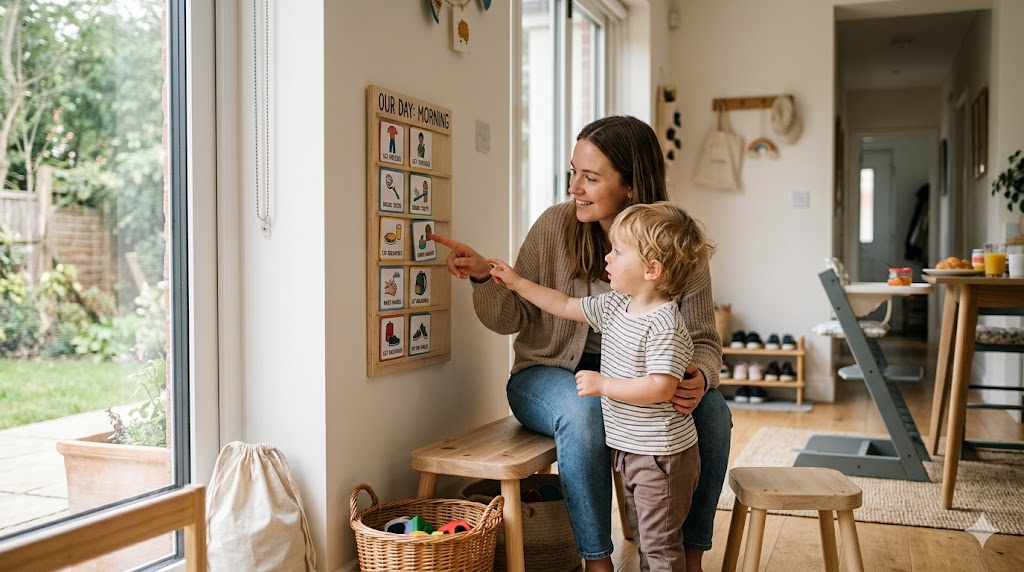
toddler morning routine support can be practical and flexible when it matches your child’s needs.
Why Morning Routines Work
Toddlers resist mornings not because they are difficult, but because being suddenly required to stop playing, get dressed, eat, and leave the house all on someone else schedule asks a lot of a developing brain wired for exploration, not compliance. A morning routine changes the dynamic by making the sequence predictable. When your toddler knows breakfast always comes after getting dressed, their brain can prepare for each transition rather than being surprised by it.
The 5-Step Framework
Keep it to 5 steps or fewer. Wake and toilet. Get dressed. Breakfast together. Teeth and face. Shoes and bag, then go. The same order every morning, every day.
The Visual Chart
A visual morning routine chart with pictures of each step is the single most effective tool for toddlers aged 18 months to 5 years. The chart becomes the authority rather than you, which removes the power struggle because the chart cannot be negotiated with the way a person can.
Common Mistakes
Starting the routine too late leaves no buffer for resistance. Skipping steps when running late undermines the whole structure. Screens before the routine is complete make the transition significantly harder. Give yourself two weeks before judging results; most families see real improvement by day 10 to 14.
Expert Tip
Prepare as much as possible the night before, clothes chosen, bag packed, breakfast decided. Every decision made the night before is one less decision, and one less opportunity for conflict, during the morning itself.
Choose a few anchor steps
Start with four or five actions such as toilet, clothes, breakfast, teeth, and shoes. Put them on a picture chart at your child’s eye level. The chart is a prompt, not a scorecard. Point to the next picture and give one instruction at a time instead of listing the whole morning.
Use connection before correction
Greet your child, offer a quick cuddle, and then name what is happening: “Good morning. First we use the bathroom.” A calm start often prevents the resistance that appears when a child feels hurried or ignored. Keep your voice steady even when the clock is not.
Offer small choices
Choices create cooperation without giving away the plan. Ask whether your child wants the blue shirt or the green one, or whether they want to hop or walk to the door. Save open-ended decisions for later; too many choices can slow a tired child down.
Plan for hard mornings
Pack bags the night before, keep a spare outfit nearby, and build in five minutes for delays. On weekends, keep the first and last steps familiar even if breakfast happens later. If mornings remain extremely stressful, discuss sleep, sensory needs, or transitions with your child’s teacher or pediatrician.
Adjusting a toddler morning routine
A toddler morning routine can change with sleep, school, and family schedules while keeping the first few steps familiar. Keeping toddler morning routine practical and repeatable helps the whole family.
For broader, evidence informed context, see AAP toddler guidance.
Related Guides
Morning Routine | Daily Routines Guide | Free Routine Charts
Sources
This guidance reflects general, widely-accepted early childhood routine-building practices. It is not a substitute for individual guidance from your child care provider or pediatrician.
Ready to Build a Calmer Morning?
Explore our complete daily routines guide or download a free visual routine chart to start tonight.