Social Skills: How They Develop and How to Support Them
Social skills do not emerge fully formed. They develop gradually through play, conflict, repair, and the consistent modelling of the adults surrounding a child from infancy onward.
The Developmental Sequence
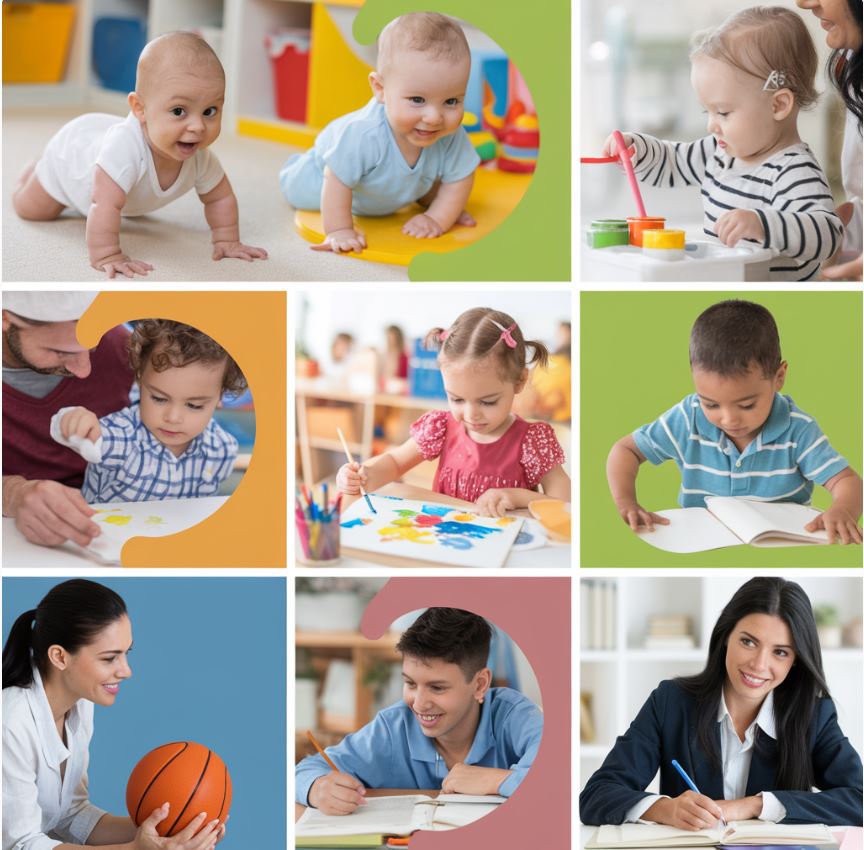
Infants engage primarily in solitary exploration with growing interest in faces and social responsiveness. Toddlers typically engage in parallel play, playing alongside rather than directly with peers, before genuine cooperative play emerges around age 3 to 4. Preschoolers develop early friendship concepts, turn-taking, and basic conflict navigation with significant adult support still needed. School-age children develop more complex friendship dynamics, group belonging, and increasingly independent conflict resolution.
How Parents Can Support Social Development
Provide regular opportunities for peer interaction appropriate to developmental stage rather than expecting sophisticated social skills before they are developmentally possible. Coach through conflicts rather than solving them entirely, narrating the process, it looks like you both want the same toy, what could we try. Model warm social interaction in your own relationships, as children absorb social patterns primarily through observation.
Frequently Asked Questions
Is parallel play a sign of a social problem?
No. Parallel play is the developmentally typical and expected form of peer interaction in toddlers and should not cause concern.
Related Resources
Child Development Guide | Sibling Rivalry | Building Confidence