Key Points
- A short six step sequence is easier to repeat than an elaborate routine
- Start the wind down before the first bath or book so the body gets an early signal
- Offer small choices while keeping the order and ending predictable
- Reading, connection, and the same goodnight words help the brain expect sleep
- Adjust the routine for age, sensory needs, and family schedule without losing its shape
A bedtime routine does not have to be long or perfect to work. Young children usually settle more easily when the same few steps happen in the same order, with a calm adult nearby and a clear ending. The routine becomes a bridge between busy daytime energy and sleep.
This six step plan is designed for toddlers and preschoolers. Use it alongside our guide to bedtime resistance when your child keeps asking for one more story or leaving the room.
Step 1: Give a Wind Down Signal
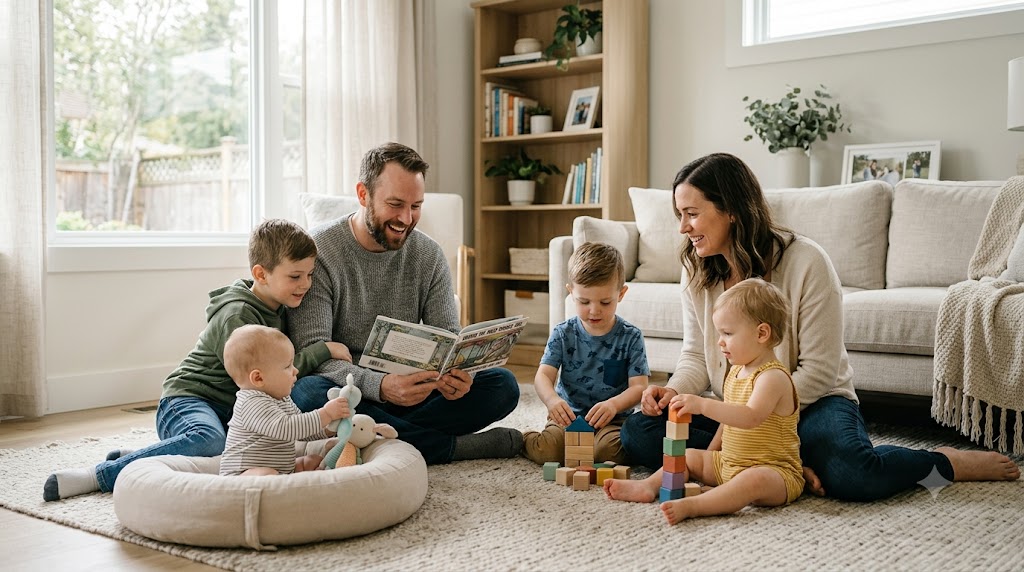
About twenty to thirty minutes before the routine, lower the lights, turn off screens, and shift to quieter play. This early signal matters because a child cannot move from high energy to sleep in one instant. Use the same phrase each night, such as “The day is slowing down.”
Make the Signal Visible
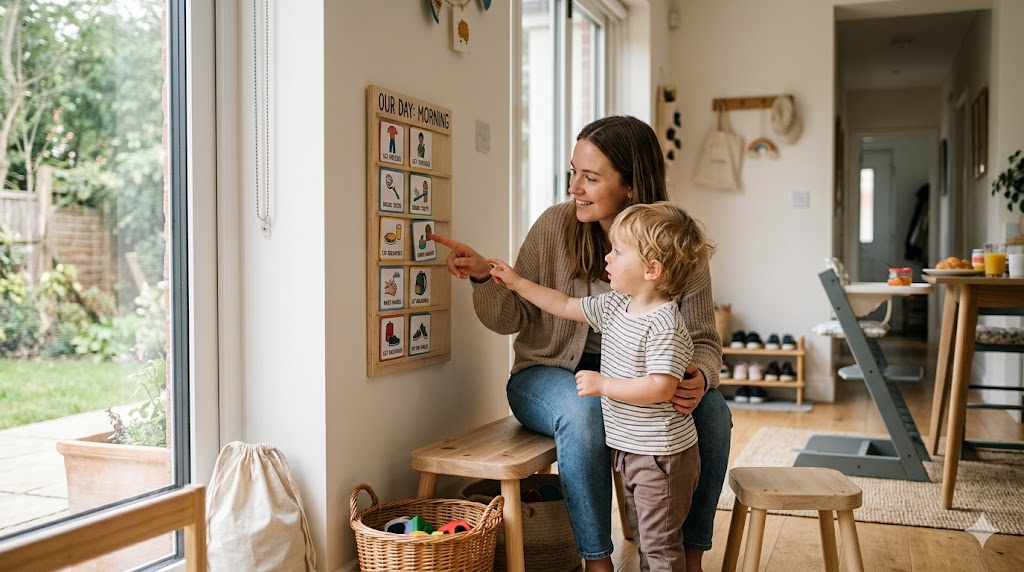
A small lamp, a picture cue, or a timer can help children who do not yet understand time. Keep the explanation short and follow through consistently. The goal is not to make the transition exciting, but to make it familiar.
Step 2: Wash, Bath, or Toilet
Choose a simple hygiene step that fits your family. A bath can be soothing, but it does not need to happen every night. Washing hands and face, using the toilet, and putting on a sleep diaper or underwear can be enough. Keep water play brief if it tends to make your child more alert.
Step 3: Pajamas and Bedroom Check
Invite your child to choose between two suitable pajamas, then help with teeth and a quick room check. The check can include closing curtains, choosing a comfort object, and placing water where it belongs. Avoid turning it into a long search for problems, which can create new reasons to stay awake.
Step 4: Read Together
Reading is the heart of many effective bedtime routines because it combines connection, language, and a slower pace. Offer one or two short books and let your child choose between them. If a book becomes too stimulating, switch to a familiar story with a gentle ending.
Keep Books Predictable
Use a clear limit before you start: “We will read two books, then cuddle.” If your child asks for more, acknowledge the wish and repeat the plan without debating. A predictable limit feels safer than changing the number every night.
Step 5: Cuddle, Song, or Breathing Game
After books, choose one quiet connection cue. A short song, a back rub, or three slow breaths can help the body settle. Keep this step brief and repeat the same words. You are teaching a signal, not performing a perfect relaxation exercise.
Step 6: Lights Out and the Same Ending
Use one closing phrase every night: “I love you. It is sleep time. I will see you in the morning.” Turn off the light, offer a brief hug, and leave or begin your planned check ins. The repeated ending tells your child that the routine is complete.
Why Six Steps Are Enough
Families often add more steps when a child resists, but a longer routine can create more opportunities for negotiation. Six steps cover transition, hygiene, connection, and closure without exhausting the adult. On difficult nights, shorten the middle while protecting reading, a cuddle, and the same ending.
Match the Routine to Your Child
A younger toddler may need more physical help with pajamas. A preschooler may enjoy a picture chart and a small choice about the book. Children with sensory sensitivities may prefer a washcloth to a bath or a dimmer light. Keep the structure stable while adjusting the details that affect comfort.
Handle Stalling Without Losing Calm
When your child asks for a snack, another drink, or a different book, pause and check whether a real need is present. If it is not, use a short response: “The routine is finished. You can rest now.” Return to the same phrase instead of adding new rewards or consequences. Calm repetition is more effective than a long explanation.
What to Do on Busy Nights
Use a shortened version in the same order. Wash, pajamas, one book, cuddle, and the closing phrase can fit into ten minutes. Tell your child, “Tonight is the short routine. The order stays the same.” Keeping the shape protects the habit even when the clock is tight.
Common Mistakes
- Starting after the child is already overtired.
- Allowing screens or rough play between the final steps.
- Changing the ending every night.
- Adding extra books because the child protests.
- Expecting the routine to remove every night waking.
When to Seek Support
Speak with a healthcare professional if sleep is disrupted by loud snoring, breathing pauses, pain, persistent itching, or extreme daytime sleepiness. A sleep specialist can help when bedtime takes hours for several weeks despite a consistent routine.
Frequently Asked Questions
How long should the routine take?
About twenty to thirty minutes works for many toddlers. A short version is useful on busy nights.
Should bath happen every night?
No. Choose the hygiene step that calms your child and fits your family. A bath is optional, not a requirement.
What if my child leaves the room?
Walk them back with few words and repeat the same closing phrase. Consistency teaches the boundary without creating a new conversation.
How quickly will it help?
Some families notice changes within ten to fourteen nights, but progress varies. Look for small improvements and keep the order steady.
Building a bedtime routine
A predictable bedtime routine helps toddlers move from busy play toward rest with fewer surprises. Keeping bedtime routine practical and repeatable helps the whole family.
For broader, evidence informed context, see AAP sleep guidance.
Related Guides
Bedtime Resistance | Independent Sleep | Nightmares and Night Fears | Positive Discipline
Sources and Editorial Note
This article is educational information and is not medical advice. Guidance was reviewed against general pediatric sleep recommendations from American Academy of Pediatrics HealthyChildren.org and ZERO TO THREE. Seek individualized advice for breathing concerns, pain, or persistent sleep difficulty. Reviewed by the Simplee Parenting editorial team.
Ready for calmer bedtimes?
Use this six step rhythm consistently and adjust only what your child needs.