Key Points
- Toddlers need different amounts of sleep, so a schedule should be flexible rather than rigid
- Many children move from two naps to one longer nap between about 12 and 18 months
- A short, repeated pre nap routine helps your child recognize that rest is coming
- Late or very long naps can affect bedtime, but cutting sleep too quickly can backfire
- Quiet rest still has value on days when your toddler does not fall asleep
A consistent nap schedule can make the middle of the day feel calmer for everyone. It gives your toddler a familiar rhythm for eating, playing, resting, and reconnecting, while giving you a clearer way to notice when tiredness is building. A schedule is also one useful part of a wider daily routine for toddlers, not a test that your family has to pass perfectly.
Toddlers change quickly. A child who needed two naps a few months ago may suddenly resist the morning nap, while a child who seemed ready for one nap may become overtired by late afternoon. The goal is not to force sleep at a specific minute. It is to create predictable opportunities for rest and adjust gently when your child’s needs change.
What Is a Consistent Nap Schedule?
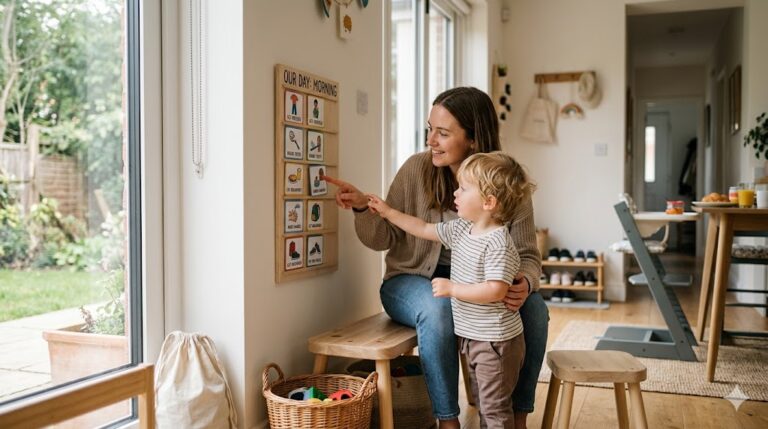
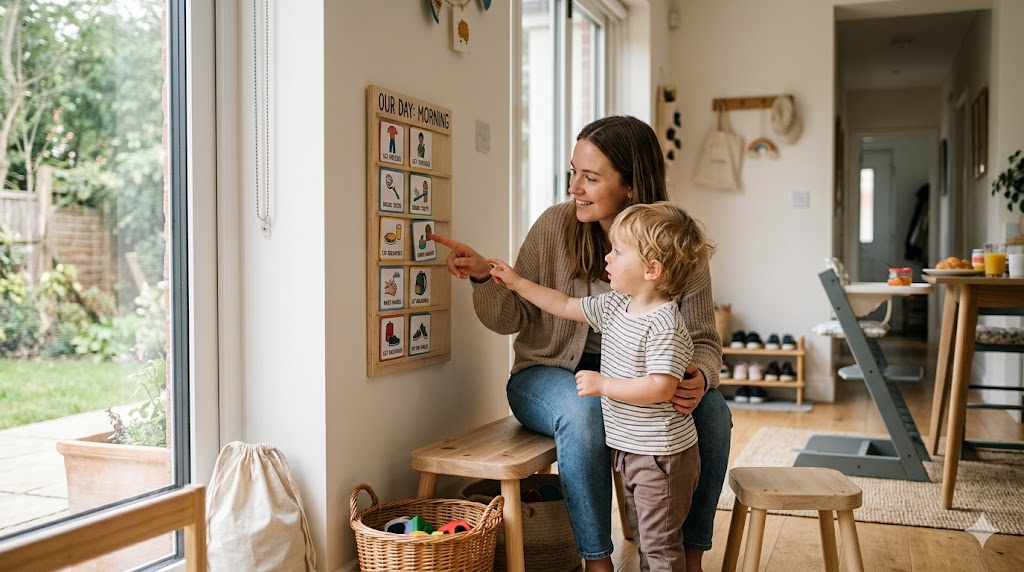
A consistent nap schedule means that rest happens within a familiar part of the day, with a short routine that signals the transition. It does not mean every nap lasts the same length or that you ignore your child’s tiredness. Think of it as an anchor. A consistent nap schedule gives the rest of the day a gentle shape without taking away flexibility. Wake time, meals, light exposure, and a predictable wind down sequence work together to make the day easier to read.
How Much Daytime Sleep Do Toddlers Need?
Sleep needs vary from child to child. The Centers for Disease Control and Prevention notes that toddlers from 1 to 2 years generally need 11 to 14 hours of total sleep in 24 hours, including naps. The American Academy of Pediatrics explains that daytime sleep is part of the whole picture, so nap length should be considered alongside night sleep.
From 12 to 18 Months
Many children in this stage still take two naps, although the morning nap may gradually become shorter. Some begin moving toward one longer afternoon nap. Watch your child’s mood, energy, and ability to manage the late afternoon rather than relying on age alone.
From 18 to 36 Months
Many toddlers settle into one midday nap. A nap of about one to two hours is common, but some children sleep less and still function well, while others need more. A calm rest opportunity is useful even when sleep does not happen.
From 3 to 5 Years
Some preschoolers still nap, while others need quiet time instead. If a late nap makes bedtime consistently difficult, try moving rest earlier or replacing sleep with a calm activity while protecting enough total sleep across the day.
Sample Toddler Nap Schedules
These examples are starting points, not prescriptions. Move the times to fit your child’s natural wake time, childcare schedule, meals, and bedtime.
| Age range | Morning | Rest period | Evening |
|---|---|---|---|
| 12 to 18 months | Wake around 7:00 and first nap around 9:30 | Second nap around 1:30 when needed | Bedtime around 7:00 |
| 18 to 36 months | Wake around 7:00 | One nap or quiet rest around 12:30 | Bedtime around 7:30 |
| 3 to 5 years | Wake around 7:00 | Quiet rest around 1:00, with sleep if needed | Bedtime around 7:30 |
Use the pattern for a week, then look at the whole day. A single difficult nap does not mean the schedule has failed.
How to Build a Consistent Nap Schedule
1. Start With a Reliable Morning Anchor
A broadly similar wake time gives the day a reference point. It does not have to be exact. A thirty minute range is often more realistic for family life than trying to wake your child at the same minute every morning.
2. Notice Sleepy Cues Before Overtiredness
Yawning, slower play, staring into space, clinginess, and sudden frustration can all signal that rest is near. If you wait until your toddler is extremely tired, settling may become harder. If your child is cheerful and active, a nap attempt that is too early may also lead to resistance.
3. Repeat a Short Pre Nap Routine
Choose two or three quiet steps and do them in the same order. You might close the curtains, change a diaper, read one short book, and sing the same soft song. Keep the routine brief enough that it can work at home and in childcare.
4. Protect the Sleep Environment
A dim, comfortable, and reasonably quiet room can help your toddler settle. A familiar sleep sack or comfort object may also help when it is safe and appropriate for your child’s age. Keep the room free from hazards and follow current safe sleep guidance for your child’s stage.
5. Give Your Toddler Time to Settle
After the routine, pause before adding more help. Some children need a few quiet minutes to move from play into rest. Offer reassurance in a calm voice, but avoid turning the nap into a long negotiation.
6. Keep Late Afternoon Flexible
If the nap runs late, protect bedtime by shortening the nap gently when needed or offering quiet time instead. Do not remove a nap suddenly just because one bedtime was difficult. Look for a pattern across several days.
Moving From Two Naps to One
The transition from two naps to one is rarely a single event. Keep your consistent nap schedule flexible while your toddler adjusts. Many children begin showing signs between about 12 and 18 months, but the timing varies. Common signs include refusing the morning nap for several days, taking a long time to settle at bedtime after two naps, and managing the morning comfortably while becoming tired before lunch.
A Gentle Transition Plan
- Move the morning nap later by fifteen minutes every few days.
- Offer lunch before the new midday nap when practical.
- Use an earlier bedtime on days when the transition causes extra tiredness.
- Keep a brief morning rest available during the adjustment if your child clearly needs it.
- Expect uneven days. Progress can move forward and backward for a while.
What If My Toddler Refuses to Nap?
Start by checking the basics. A consistent nap schedule works best when it leaves room for hunger, illness, and changing energy. Is your child hungry, uncomfortable, too stimulated, or simply not tired yet? Keep the rest routine calm and give a reasonable opportunity for sleep. If sleep does not happen, replace the nap with quiet time in a safe space so your child can still slow down.
When Daycare and Home Schedules Differ
Some variation between home and childcare is normal. Ask the caregiver what sequence they use before rest and borrow one or two familiar cues at home. Sharing the same short song, phrase, or book can make the transition easier without requiring identical schedules.
Can Naps Affect Nighttime Sleep?
They can. A very late or unusually long nap may reduce sleep pressure at bedtime for some children. On the other hand, cutting naps too aggressively can leave a toddler overtired and make the evening more unsettled. Adjust one variable at a time, such as the nap start time or length, and observe the pattern for several days before making another change. If the consistent nap schedule is helping, the pattern will usually become clearer over several days.
Common Mistakes to Avoid
- Expecting a rigid timetable to work during growth spurts, illness, travel, or family changes.
- Dropping naps after one difficult bedtime.
- Using screens or energetic play as the main way to settle before rest.
- Keeping a child awake far past their comfortable tiredness window.
- Turning rest into a battle or describing sleep as something your child is “bad” at.
- Comparing your toddler’s sleep with another child’s schedule.
Frequently Asked Questions
What is a good nap time for a toddler?
For many toddlers on one nap, early afternoon works well, often after lunch. The best time depends on morning wake time, sleepy cues, and how rest affects bedtime.
How long should a toddler nap?
There is no single correct length. The right consistent nap schedule is the one that supports your child’s total sleep and your family’s evenings. Many toddlers sleep about one to two hours, while some need less and others need more. Consider the total sleep across 24 hours and your child’s daytime mood.
Should I wake my toddler from a nap?
Sometimes. If a long or late nap repeatedly pushes bedtime too late, gently waking your child earlier may help. Make changes gradually and protect enough total sleep for your child.
What can replace a nap?
A quiet rest period with books, soft music, or calm play can replace a nap for a child who no longer sleeps during the day. Keep the period predictable and free from pressure.
Making a consistent nap schedule work
A consistent nap schedule can be flexible when you watch your toddler’s tired signs and protect a calm wind down before sleep. Keeping consistent nap schedule practical and repeatable helps the whole family.
For broader, evidence informed context, see AAP sleep guidance.
Related Guides
Daily Routines | Bedtime Routine | Toddlers 1 to 3 Years | Parenting by Age
Sources and Editorial Note
This article is educational information for parents and is not medical advice. Sleep needs vary, and families should seek individualized guidance from a qualified healthcare professional when sleep concerns are persistent or safety is involved. The guidance was checked against the Centers for Disease Control and Prevention, American Academy of Pediatrics HealthyChildren.org, and ZERO TO THREE. Reviewed by the Simplee Parenting editorial team.
Building a Calmer Daily Rhythm?
Explore practical routines for sleep, meals, transitions, and calmer family days.