Learning Through Play: Why It Is the Most Important Work Children Do
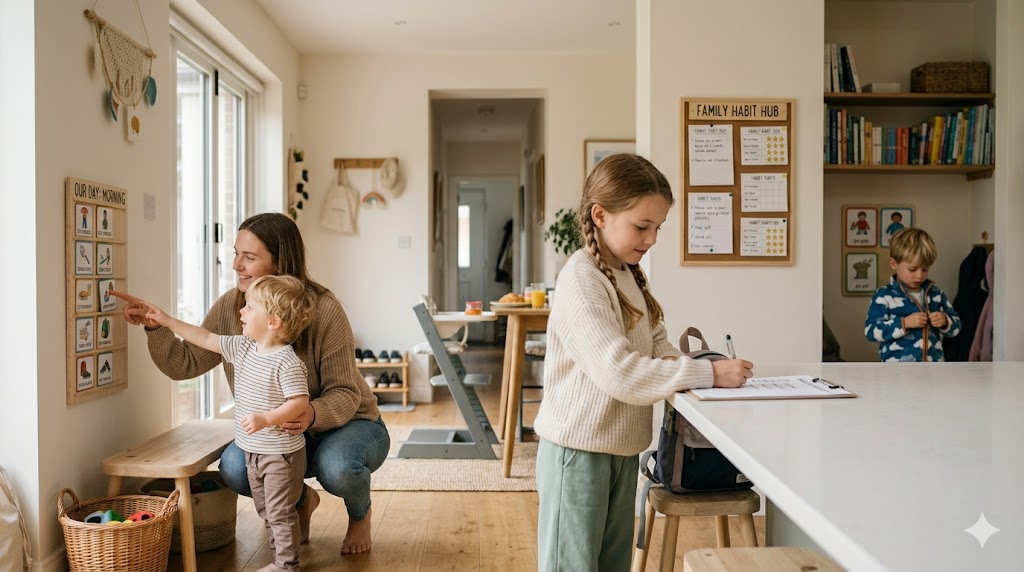
Play is not a break from learning in early childhood. It is the primary vehicle through which learning happens, and understanding this changes how parents think about the value of unstructured play time.
What Play Builds
Cognitive skills develop through the problem-solving inherent in building, sorting, and pretend play. Social skills develop through cooperative and imaginative play with peers, negotiating roles and rules together. Emotional regulation develops as children process real experiences and feelings safely through pretend scenarios. Physical development is supported through active, gross motor play across every stage of childhood.
Supporting Rich Play
Provide open-ended materials, blocks, art supplies, dress-up items, rather than only single-purpose toys, as open-ended materials support more creative and cognitively rich play. Allow genuinely unstructured time without constant adult direction, as child-led play builds independence and creativity that adult-directed activity does not. Join play when invited without taking over, following the child lead rather than redirecting toward an adult agenda.
Frequently Asked Questions
Is educational screen-based play equivalent to physical play?
No. Research consistently shows hands-on physical and social play produces stronger developmental benefits than screen-based alternatives, even those marketed as educational.
Related Resources
Child Development Guide | Cognitive Development | Social Skills
Learning Through Play: A Practical Guide for Every Age
Quick answer: Learning through play happens when children explore, make choices, test ideas, communicate, move, imagine, and solve problems. The adult role is to provide safety, time, useful materials, and just enough support without taking control.
What Children Learn Through Play
- Thinking skills: planning, memory, flexible thinking, cause and effect, and problem solving.
- Language: new words, storytelling, listening, turn taking, and explaining ideas.
- Social skills: cooperation, negotiation, empathy, and managing small conflicts.
- Emotional skills: expressing feelings, tolerating frustration, and practicing self control.
- Physical skills: balance, coordination, hand strength, and precise movement.
Learning Through Play Activities by Age
| Age | Helpful play ideas | Skills supported |
|---|---|---|
| Babies | Peekaboo, texture baskets, songs, and supervised floor play | Connection, sensory learning, movement, and early communication |
| Toddlers | Stacking, pouring, matching, pretend kitchens, and simple puzzles | Cause and effect, coordination, language, and imitation |
| Preschoolers | Building, role play, sorting, art, and scavenger hunts | Imagination, planning, early math, and cooperation |
| Ages 6 to 8 | Board games, construction, nature journals, and group games | Rules, strategy, persistence, and teamwork |
| Ages 9 to 12 | Creative projects, coding games, sports planning, and experiments | Complex problem solving, responsibility, and collaboration |
How to Extend Play Without Taking Over
- Observe first and notice what your child is trying to do.
- Describe what you see instead of constantly testing with questions.
- Ask one open question, such as “What do you think might happen next?”
- Add one material or small challenge when interest begins to fade.
- Allow mistakes and pauses so the child can develop their own solution.
Simple Materials That Encourage Rich Play
Blocks, cardboard boxes, paper, tape, crayons, water cups, scarves, recycled containers, dolls, toy animals, and safe household objects can support more creativity than toys with only one fixed purpose.
Frequently Asked Questions
Does free play really count as learning?
Yes. Child led play can build attention, language, planning, emotional control, and social problem solving, especially when children have enough uninterrupted time to follow an idea.
How long should children play each day?
There is no single perfect number. Protect several regular periods for active, imaginative, and social play, and choose a rhythm that works for your child, family, and daily responsibilities.
Should I solve boredom immediately?
Not always. A short period of boredom can help children generate ideas. Offer two simple choices or place open ended materials nearby, then give your child time to begin.
Continue Building These Skills
Explore cognitive development in children, build everyday confidence with independence skills, and support the transition to learning with our school readiness guide.
Trusted Sources
- UNICEF and the LEGO Foundation: Learning Through Play
- Harvard Center on the Developing Child: Activities for Executive Function Skills
Editorially reviewed using our editorial policy and sources and references standards.