Morning Routine: Build a Calm Consistent Start to the Day
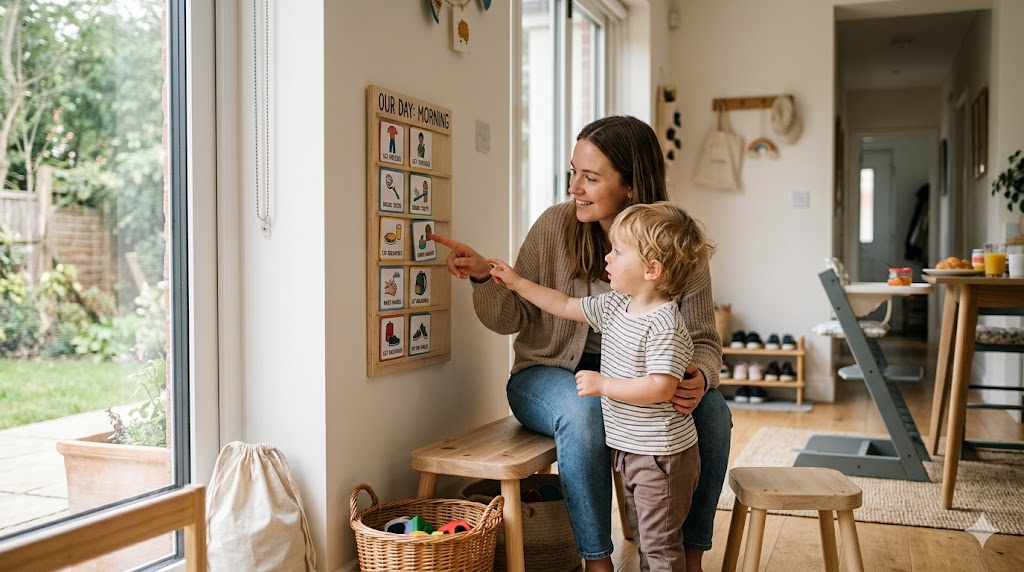
A rushed, chaotic morning creates stress hormones that affect a child mood and behavior for hours afterward. A calm, predictable morning routine produces the opposite effect and is one of the highest-leverage changes most families can make.
The 5-Step Framework
Keep the sequence to 5 steps or fewer: wake and toilet, get dressed, breakfast, teeth, shoes and bag. The same order every single day. Consistency of sequence, more than exact timing, is what produces the behavioral benefit. A visual chart with pictures of each step allows even pre-reading children to follow the routine independently, which removes much of the need for constant verbal reminders.
Practical Tips
Prepare as much as possible the night before: clothes chosen, bags packed. Give a five-minute warning before each transition rather than requiring an instant shift. Build in more time than feels necessary, as morning rushing itself generates resistance. Avoid screens before the routine is fully complete, as they make the subsequent transition significantly harder.
Frequently Asked Questions
How long does it take for a new morning routine to work?
Most families see meaningful improvement within 10 to 14 days of consistent use.
Related Resources
Daily Routines Guide | Bedtime Routine | Free Routine Charts
Morning Routine for Kids: A Calm School Day Plan
Quick answer: A successful morning routine for kids uses the same short sequence each day, prepares key items the night before, gives children age appropriate responsibility, and includes a time buffer. A visual checklist reduces repeated reminders and makes progress easy to see.
Prepare the Night Before
- Choose clothes and place them where the child can reach them.
- Pack the school bag, sign forms, and charge needed devices.
- Prepare lunch items and decide on a simple breakfast.
- Place shoes, coats, and keys near the exit.
- Protect a consistent bedtime so waking is more manageable.
A Simple 30 Minute Morning Schedule
| Time | Step | Parent cue |
|---|---|---|
| Minutes 0 to 5 | Wake, connect, and use the toilet | Offer a warm greeting and one clear first step |
| Minutes 5 to 12 | Get dressed | Point to the checklist before repeating instructions |
| Minutes 12 to 20 | Eat breakfast | Keep choices limited and predictable |
| Minutes 20 to 25 | Brush teeth and hair | Use a timer or song if it helps pacing |
| Minutes 25 to 30 | Shoes, bag, and leave | Use the final minutes as a buffer, not extra tasks |
Adjust the timing to your household. The consistent order matters more than matching this example exactly.
Use a Visual Morning Checklist
Show no more than five or six steps with words, pictures, or both. Place the checklist at the child’s eye level. Ask “What comes next?” instead of repeating every direction. Let the child move a clip, check a box, or turn over each card when finished.
Age Appropriate Expectations
- Ages 3 to 5: complete one step at a time with close support and simple picture cues.
- Ages 6 to 8: follow a short checklist, dress, pack simple items, and check their bag with a parent.
- Ages 9 to 12: use an alarm, manage most personal care, prepare basic breakfast, and check departure time.
Calm Scripts for Morning Resistance
- “You want more time in bed. It is hard to stop resting. First clothes, then breakfast.”
- “You can choose the blue shirt or the green shirt.”
- “I will help with the first shoe. You can finish the second.”
- “The checklist says teeth are next. Would you like the timer or the song?”
Common Mistakes That Make Mornings Harder
Avoid too many choices, long lectures, last minute searches, screens before essential tasks, and adding unnecessary jobs when the child is already late. If the same step fails repeatedly, simplify it or move part of it to the night before.
Build the Rest of Your Family Rhythm
Create a broader family routine, improve evenings with a bedtime routine, print our free routine charts, and use these solutions for common parenting challenges.
Trusted Sources
- CDC: Positive Parenting Tips
- Harvard Center on the Developing Child: Activities for Executive Function Skills
Editorially reviewed using our editorial policy and sources and references standards.