Printable checklists for parents can hold the small details that are easy to forget when family life is busy. A good list does not add pressure. It clears space for attention by putting the next steps somewhere visible, repeatable, and easy to adapt.
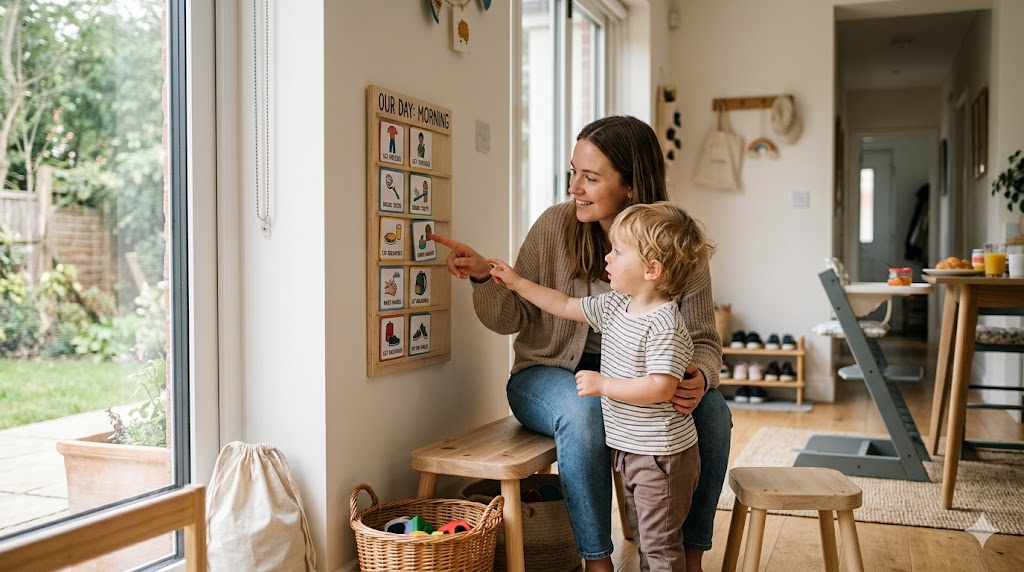
At a glance
Print only what solves a real problem, keep the list short, and change it when your family changes. A checklist is a support tool, not a standard you must complete perfectly.
What Can Printable Checklists Help With?
Parents often use checklists for repeated transitions, occasional preparation, and shared responsibilities. The right list depends on the moment and the people using it.
Daily routines
A morning or evening checklist can hold the order of tasks such as dressing, eating, packing, and brushing teeth. Pair it with our Routine Charts when your child benefits from a visual sequence.
Travel and outings
A short packing list can cover medication, comfort items, snacks, weather layers, and chargers. Leave room for the destination so the list remains useful instead of becoming a generic page of everything.
New baby preparation
Expectant parents may use a checklist for hospital bag items, questions for a prenatal appointment, or the first week at home. Keep medical decisions connected to guidance from your own care team.
Free Printable Tools You Can Use Now
For a child facing a daily transition, download the Daily Routine Chart PDF. For an emotional check in, use the Feelings Check In Chart PDF. Print one copy first, test it for a week, and then adjust the wording to match your home.
How to Make a Checklist Easy to Use
- Begin with the exact decision or transition that feels difficult.
- Write the steps in the order they happen, using short verbs.
- Group optional items separately so the essentials stay visible.
- Leave white space for notes, changes, or a child’s own ideas.
- Place the list where the action happens, not hidden in a folder.
- Review it after a week and remove steps that no longer help.
Checklists for Different Family Needs
Some children need pictures, fewer words, or a larger print area. Some parents prefer a phone note, a laminated page, or a clipboard. If your child has attention, language, sensory, or motor differences, adapt the format rather than treating difficulty as carelessness.
When a child uses a checklist, read the first few steps together and celebrate completion of the process, not just the final result. A parent can keep a separate version for details that do not belong on the child’s page.
Common Mistakes to Avoid
A list becomes stressful when it contains every possible task, uses vague language, or stays unchanged after the situation has changed. Avoid using a checklist to criticize yourself or your child. Its job is to offer a reliable prompt and make shared work easier.
Frequently Asked Questions
How many items should a checklist include?
Start with the smallest useful list. Five to ten steps is often easier to use than a crowded page, especially during a rushed transition.
Should I laminate a printable?
Laminating helps with repeated use and dry erase markers, but a plain printed page is fine for testing the routine first.
How often should I update it?
Update the checklist when the season, schedule, child’s abilities, or family responsibilities change.
Related Parenting Resources
Browse the Parenting Resources library, explore Family Planners, or use Free Parenting Printables as your central reference.
For general family routine guidance, visit HealthyChildren.org.
Checklists are organizational tools and do not replace medical advice or instructions from a qualified professional.
Download the Free Printable
Print this one page tool at home and use it alongside the guidance on this page.