Key Points
- Jealousy, clinginess, and regression are common ways children process a new sibling
- Honest preparation works better than promising that nothing will change
- Small daily moments of one to one attention protect your older child’s sense of belonging
- Involvement should feel like genuine choice, never a requirement to be helpful
- Warm boundaries keep everyone safe while difficult feelings are accepted
A new baby changes the rhythm of the whole family. Your older child may be excited one minute and furious the next. They may ask for help with things they used to do alone, say they do not like the baby, or become unusually clingy. These reactions are not proof that you have prepared badly. They are ways a child checks whether there is still a secure place for them.
This guide offers practical ways to support the transition before and after birth. When big feelings spill into daily routines, our big feelings guide can help you respond without shame or comparison.
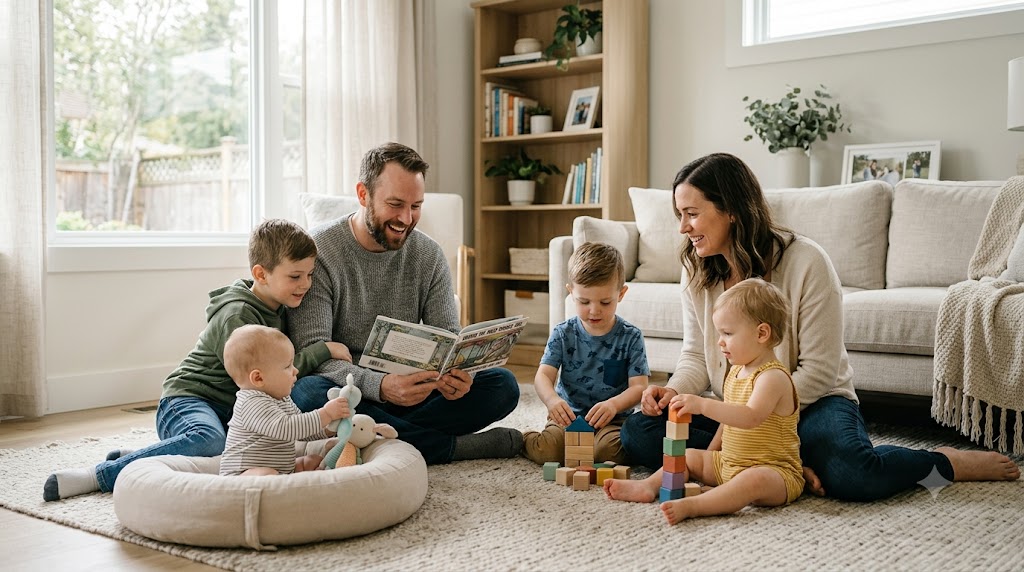
What Your Older Child May Feel
Children can love the baby and resent the changes at the same time. They may worry that adults have less time, that the baby will take their belongings, or that they must become grown up overnight. Regression, baby talk, toileting accidents, sleep changes, and increased tantrums are common during a major family transition.
Accept the Mixed Feelings
If your child says, “Send the baby away,” avoid correcting the feeling. Try, “You wish it were just us right now. I love you, and the baby is staying.” Acceptance does not mean allowing unsafe behaviour. It means making room for the emotion so your child does not need to intensify it to be heard.
Prepare with Honest, Simple Information
Explain what will happen in concrete language. The baby will cry, sleep, feed, and need help. You may be tired. Some plans will change. Honest preparation builds trust, while promises that everything will stay the same can feel like a betrayal when real life becomes busy.
Use Books and Pretend Play
Read a short sibling book, look at baby photos, or practise with a doll if your child enjoys it. Follow your child’s lead and do not turn every play session into a lesson about being helpful. A child can be curious without being ready to share every feeling.
Protect Familiar Anchors
Keep a few predictable routines wherever possible, such as the same bedtime phrase, preschool drop off, or weekend breakfast. If a routine must change, explain it ahead of time and name what will stay the same. Familiar anchors reduce the feeling that the whole world has moved.
Plan a Welcome That Does Not Create Pressure
When the baby arrives, greet your older child before asking them to admire the baby. A warm hug, eye contact, and a simple “I missed you” can matter more than a present. If you offer a sibling gift, present it as a kind gesture rather than payment for being good.
Create Daily One to One Time
Ten focused minutes can be more powerful than an occasional large outing. Let your older child choose a small activity, put your phone away, and describe what you notice. Say, “This is our time together.” If the baby needs you, explain what is happening and return to the activity when you can.
Use Micro Moments Too
A cuddle while the kettle boils, a private joke during nappy changing, or a short walk to the letterbox can remind your child that connection is available throughout the day. These moments are realistic when the baby’s needs are unpredictable.
Invite Participation Without Assigning a Job
Offer choices such as picking a clean nappy, singing a song, or showing the baby a picture. Thank your child for choosing to join you, then let them stop. An older child is a sibling, not a second parent. They should never be responsible for keeping the baby safe.
Hold Boundaries Around Safety
It is okay to say, “I will not let you touch the baby’s face,” or “I will move the baby because your hands are squeezing.” Keep your voice calm and give an alternative: pat the blanket, bring a clean cloth, or sit beside you. Clear boundaries protect both children without labelling the older child as jealous or bad.
Make Space for Regression
If your child asks to be fed, carried, or dressed, offer help when you can. You might say, “You can climb into my lap. I know you need extra closeness.” Gradually invite independence again when the child feels secure. Pushing too hard for big kid behaviour often creates more resistance.
Handle Comparisons and Visitors
Ask relatives to greet the older child as warmly as the baby. Avoid comments about who is easier, prettier, or more helpful. You can coach visitors with a simple message: “Please say hello to both children and give our older child a few minutes of attention too.”
Common Mistakes to Avoid
- Demanding that your child love the baby immediately.
- Using the baby as a reason to cancel every promise.
- Calling your child jealous, naughty, or selfish in front of others.
- Making the older child share special belongings without consent.
- Expecting the older child to manage the baby’s safety.
When to Seek Extra Support
Talk with a healthcare professional if aggression is frequent or dangerous, your child stops eating or sleeping for a prolonged period, toileting regression continues with distress, or sadness and withdrawal last for weeks. Support from a family therapist or parenting professional can help when the transition is overwhelming.
Frequently Asked Questions
Is jealousy normal?
Yes. Jealousy is a common response to losing exclusive access to adult time. Naming it calmly helps your child move through it.
Should I make my older child help?
No. Invite participation but keep it optional. A child who chooses to help can stop when the activity no longer feels good.
What if my child hits the baby?
Block the hit immediately and say, “I will not let you hurt the baby.” Move everyone to safety, then help your child express the feeling with words or a safe physical activity.
How long does adjustment take?
There is no fixed timeline. Many children settle gradually over several months, with ups and downs during growth spurts, illness, or family changes.
Welcoming a new baby
A new baby changes family routines, and older children need connection as much as preparation. Keeping new baby practical and repeatable helps the whole family.
For broader, evidence informed context, see AAP family guidance.
Related Guides
Big Feelings | Positive Discipline | Babies 0 to 12 Months | Sibling Rivalry
Sources and Editorial Note
This article is educational information and is not medical advice. Guidance was reviewed against family transition and early childhood resources from ZERO TO THREE and American Academy of Pediatrics HealthyChildren.org. Seek individualized support for persistent distress or safety concerns. Reviewed by the Simplee Parenting editorial team.
Growing your family?
Explore gentle tools for big feelings, sibling connection, and newborn routines.