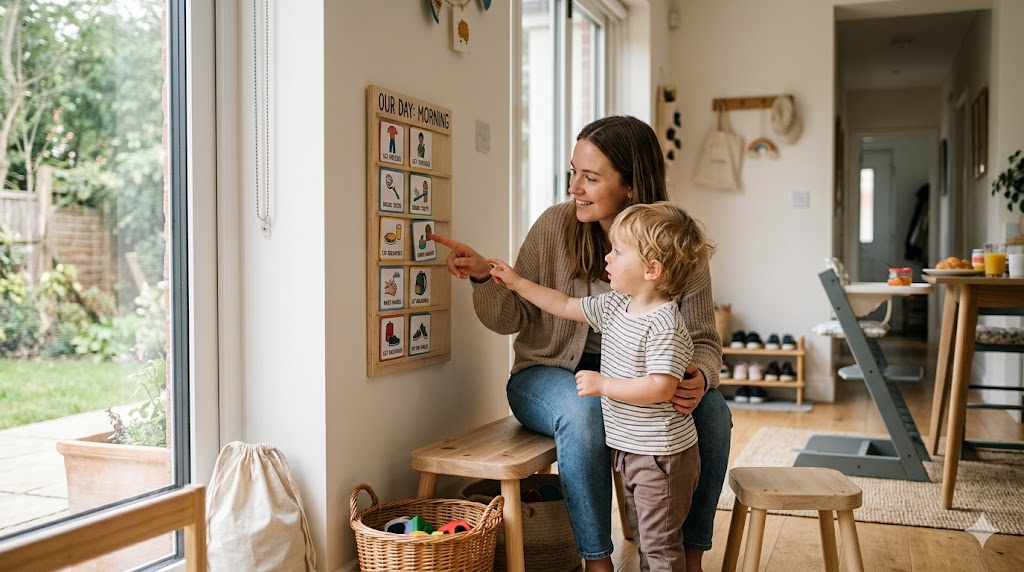
Reward charts work best when they are simple, specific, and genuinely time-limited, targeting one or two behaviors clearly rather than attempting to track everything at once.
What Is Available
A simple sticker-based chart suitable for toddlers and preschoolers, tracking one specific behavior with immediate visual feedback. A more structured weekly chart for school-age children, tracking multiple habits with a small end-of-week reward.
How to Use Them Effectively
Target one specific, clearly defined behavior at a time rather than a vague general goal. Use the chart for 2 to 4 weeks to establish a habit, then phase it out as the routine itself becomes self-sustaining. Avoid removing already-earned stickers as a punishment, which undermines the entire system.
Choose One Clear Goal
Reward charts work best when a child knows exactly what earns a mark. “Put your cup in the sink” is clearer than “be good.” Choose a behavior your child can practice with the support already available, then describe it in the same words each day.
For toddlers and preschoolers
Use one picture goal and a small number of spaces. Give the mark soon after the effort and pair it with warm attention, a high five, or a short moment together.
For school age children
Invite your child to help choose a realistic weekly goal, such as packing a school bag or feeding a pet safely. Older children can help decide how progress will be marked.
How to Use a Reward Chart Without Pressure
- Introduce the chart during a calm moment.
- Demonstrate the behavior and practice once together.
- Give feedback soon after the effort.
- Use small non material rewards such as choosing a story or family activity.
- Review the chart after one to three weeks.
- Retire it when the habit is becoming familiar.
When Reward Charts Backfire
A chart can become stressful when it tracks every behavior, changes rules without warning, or makes affection feel conditional. Never remove marks that were already earned or compare siblings. If your child worries about losing points, simplify the goal and return to modeling, encouragement, and natural consequences.
Rewards Beyond Stickers
Children are often motivated by positive attention, a special helper role, ten minutes of child led play, or choosing the bedtime book. Ask what feels encouraging to your child and keep the reward small enough to repeat without creating pressure.
Frequently Asked Questions
How long should a child use a reward chart?
Start with one to three weeks, then reduce the frequency of marks as the routine becomes consistent.
Should every good behavior earn a sticker?
No. One clear goal is easier to understand. Notice other positive behavior with ordinary words and attention.
What if my child loses interest?
Check whether the goal is too difficult, the chart is too long, or the reward is not meaningful. Redesign one small part together.
Explore Routine Charts, Chore Charts, and our Child Behavior guide for related support.
For additional positive parenting guidance, visit HealthyChildren.org from the American Academy of Pediatrics.
Download the Free Printable
Print this one page tool at home and use it alongside the guidance on this page.