Emotional Development: Stages and How to Support Them
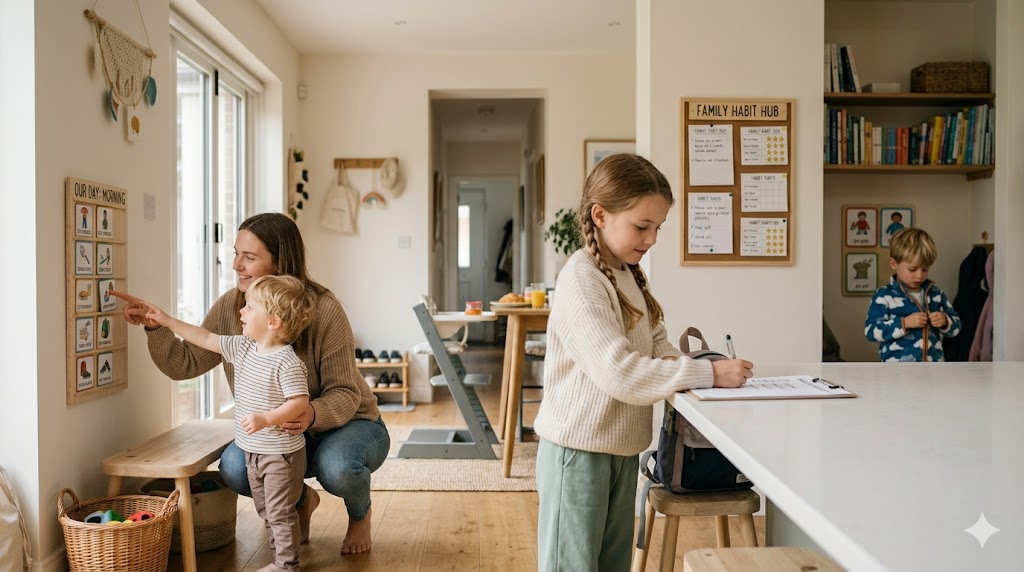
Emotional development moves in fits and starts rather than a straight line, with regressions during stress and growth during calm periods, which is important for parents to understand to set realistic expectations.
Stages of Emotional Development
Infants experience emotions fully but have no capacity to regulate or express them beyond crying and physical distress signals. Toddlers experience adult-intensity emotions with almost no regulatory capacity, producing the characteristic intensity of the toddler years. Preschoolers begin developing simple emotional vocabulary and very basic regulation strategies with significant adult support. School-age children develop increasingly sophisticated emotional understanding, including complex emotions like guilt, pride, and embarrassment, alongside growing self-regulation.
Supporting Emotional Development
Name emotions consistently in everyday moments, not only during difficulty, to build the vocabulary regulation depends on. Validate feelings while maintaining behavioral limits, teaching that all emotions are acceptable while not all actions are. Model your own emotional processing openly and appropriately, as children learn primarily through observation.
Frequently Asked Questions
Why does my child regress emotionally during stressful periods?
Temporary emotional regression during stress, illness, or major change is a normal and expected pattern, not a sign of a developmental problem.
Related Resources
Child Development Guide | Big Feelings | Emotional Regulation
Emotional Development in Children by Age
Quick answer: Emotional development is the gradual growth of a child’s ability to notice feelings, express them safely, understand other people, recover from stress, and build secure relationships. These skills develop through repeated practice with calm, responsive adults.
| Stage | What you may notice | Helpful parent response |
|---|---|---|
| Babies | Strong signals through crying, facial expressions, movement, and early social smiles | Respond consistently, name what may be happening, and offer warm back and forth interaction |
| Toddlers | Big feelings, limited impulse control, separation worries, and growing independence | Use simple feeling words, steady limits, and calm co regulation |
| Preschoolers | More pretend play, empathy, fear, frustration, and interest in friendships | Practice social scripts and use stories or play to explore feelings |
| Ages 6 to 8 | Greater awareness of rules, comparison, fairness, embarrassment, and peer approval | Listen without rushing to fix and help the child plan one next step |
| Ages 9 to 12 | More complex emotions, privacy, stronger friendships, and sensitivity to belonging | Respect growing autonomy while staying available and predictable |
Five Skills That Support Healthy Emotional Growth
- Recognizing feelings: noticing body signals and naming an emotion.
- Expressing feelings: using words, art, movement, or conversation without causing harm.
- Regulating emotions: pausing, calming the body, and choosing a safe response.
- Understanding others: noticing another person’s perspective and emotions.
- Repairing relationships: taking responsibility, reconnecting, and trying again.
Everyday Activities That Build Emotional Skills
- Name emotions naturally during books, play, and daily events.
- Use a simple feelings chart and ask where the feeling appears in the body.
- Practice calming strategies when everyone is already calm.
- Reflect after conflict with short questions instead of a long lecture.
- Create predictable routines that make transitions easier to anticipate.
- Model apologies, repair, and respectful disagreement.
What Parents Can Say
Try phrases such as “Your feeling is welcome, and I will keep everyone safe,” “I am here while your body calms,” or “What would help you repair this?” Validation does not mean allowing unsafe behavior. It means acknowledging the emotion while maintaining the limit.
When to Seek Additional Support
Talk with a pediatrician or qualified child mental health professional when emotional distress is intense, persistent, getting worse, or interfering with sleep, learning, friendships, or family life. Seek urgent local help when a child may harm themselves or someone else.
Related Guides
Continue with our guides to emotional regulation in children, social skills, and big feelings.
Trusted Sources
- Harvard Center on the Developing Child: Children’s Emotional Development
- Harvard Center on the Developing Child: Serve and Return
Editorially reviewed using our editorial policy and sources and references standards.