Daily Routines: Build a Calmer, More Predictable Family Life
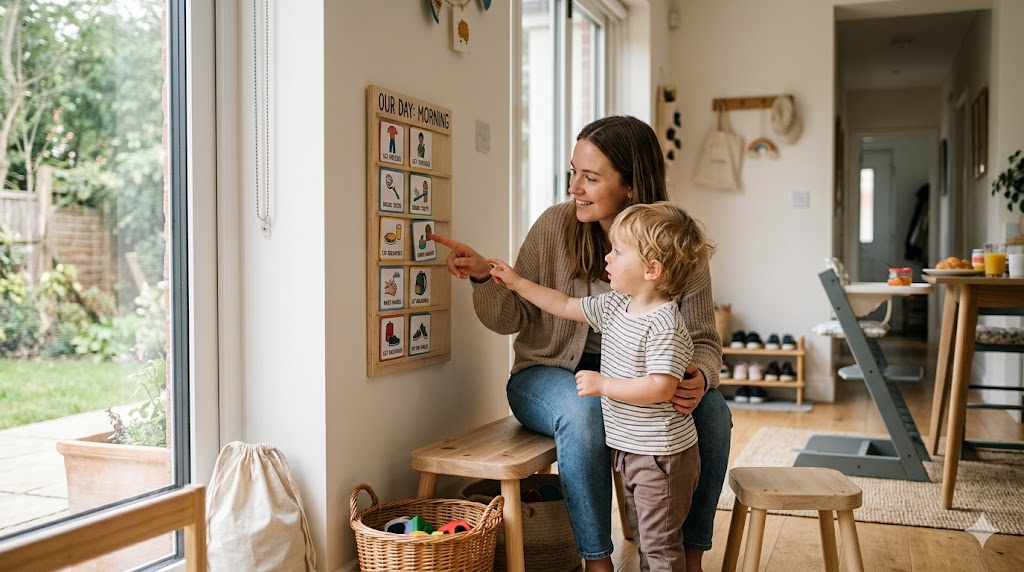
Predictable routines are one of the most powerful tools available to parents. When children know what comes next, they cooperate more, regulate better, and need far less managing. This is your complete guide to building effective daily routines for every part of family life.
Why Routines Work Better Than Willpower
Most parents try to solve daily friction with more effort in the moment, more patience, more explaining, more energy spent negotiating. Routines solve it differently, by removing the need for a decision or a negotiation in the first place. When the sequence is always the same, your child brain stops treating each step as a fight and starts treating it as simply what happens next. This is not about rigid scheduling, it is about predictability, which is one of the most powerful regulators of behavior available to any parent.
How to Choose Which Routine to Build First
If mornings feel chaotic, start with Morning Routine. This is often the single highest-impact routine because it sets the emotional tone for the entire day.
If bedtime is the daily battle, start with Bedtime Routine. This tends to be the most researched and most consistently effective routine for reducing evening conflict and improving sleep.
If mealtimes involve negotiation or refusal, Mealtime Routine addresses the specific dynamics that turn eating into a power struggle.
If screens are a recurring source of conflict, Screen Time gives you a framework, not just a time limit.
If you are building responsibility and contribution, Chores is designed around what is genuinely age-appropriate at each stage.
Explore Daily Routines
Morning Routine
Start every day with calm and cooperation. A simple consistent morning routine reduces chaos and builds independence across all ages.
Bedtime Routine
The single highest-impact routine for most families. A consistent bedtime sequence improves sleep quality, reduces battles, and calms the whole household.
Mealtime Routine
Predictable mealtime sequences reduce food refusal, negotiation, and the daily battle over what is for dinner.
Homework Routine
Build an after-school homework routine that reduces stress, builds consistency, and supports your child academic independence.
Screen Time
Practical, realistic guidance on managing screen time for children at every age. Limits, transitions, and the approach that actually works.
Chores
Age-appropriate chores build responsibility, competence, and a sense of contribution. How to introduce them and make them stick.
Family Routine
Beyond individual routines: building a rhythm for the whole family that supports connection, wellbeing, and predictability.
Weekend Routine
Why weekend routines matter and how to build enough structure to maintain the benefits of weekday routines without losing the fun.
Travel Routine
Keeping routines alive during travel and holidays. What to maintain, what to flex, and how to recover quickly afterward.
The 4-Step Formula Behind Every Routine on This Site
Every routine guide on this site follows the same underlying formula, because it is the formula that actually works. Keep the sequence to 4 or 5 steps, repeat it in the exact same order every time, give a warning before each transition, and hold the sequence consistently for at least two weeks before judging results. Routines that are longer, less consistent, or abandoned after a few difficult days rarely produce the calm they are meant to create.
Common Mistakes When Building a New Routine
Making the routine too long or too complicated. A 10-step morning routine will not be sustained. 4 to 5 steps is the sweet spot for most families.
Judging results after 2 or 3 days. The first week of any new routine is almost always the hardest, as your child tests whether the new structure is real.
Changing the sequence frequently. The repetition itself is what builds the predictability that makes a routine effective. Changing it resets that benefit.
Abandoning the routine during travel or illness instead of adapting it. A shortened version of the routine maintained during disruption recovers faster than starting over from scratch.
Building Routines Across Multiple Children
Siblings at different ages often need different specific routines, but the underlying structure, consistency, warnings before transitions, a predictable sequence, works the same way regardless of age. Younger children typically need shorter routines with more visual support, while older children can handle longer sequences with more independence built in.
Frequently Asked Questions
How long does it take for a new routine to actually work?
Most families see meaningful, measurable improvement within 10 to 14 days of consistent use, not the first few days.
Should routines be identical on weekdays and weekends?
Core anchors, wake time, bedtime, meal timing, benefit from staying consistent within about an hour, even on weekends. The activities around those anchors can be more flexible.
What if my child resists every new routine we try?
Initial resistance to any new structure is developmentally normal. Consistent, calm follow-through for at least two weeks resolves most resistance without needing a different approach.
Related Resources
Parenting by Age | Child Behavior | Parenting Resources
Choose the Routine Your Family Needs Most
Start with the moment that creates the most daily stress. Change one routine, keep the steps short, and practice it consistently before adding another.
| Challenge | Best guide to start with |
|---|---|
| Rushed school mornings | Morning routine for kids |
| Bedtime battles or delayed sleep | Bedtime routine |
| Homework arguments | Homework routine |
| Household responsibilities | Chores for children |
| An unpredictable whole day | Family routine and daily schedule |
| A child who needs visual cues | Free routine charts |
A Simple Rule for Making Routines Work
Use the same cue, the same short sequence, and the same calm follow through. Give the child a meaningful role and reduce reminders as the sequence becomes familiar. Adjust expectations for age, development, sleep, health, and family circumstances.
Trusted Sources
Editorially reviewed using our editorial policy and sources and references standards.
New Daily Routine Articles
Use these realistic routines to reduce pressure at the hardest points of the week.